Published June 10, 2026 · Altvina Insights · 4 min read
When Everything Has to Go Through the Founder
If every decision, approval, and client question routes back to one person, the business is not just busy. It is dependent in a way that creates delay, stress, and risk.
The biggest workaround in most small businesses is not a spreadsheet. It is the founder.
When a decision has nowhere reliable to go, it goes to you. You are the side system everything routes around when the real one is unclear, and you are the one workaround nobody thinks to question, because it looks like leadership.
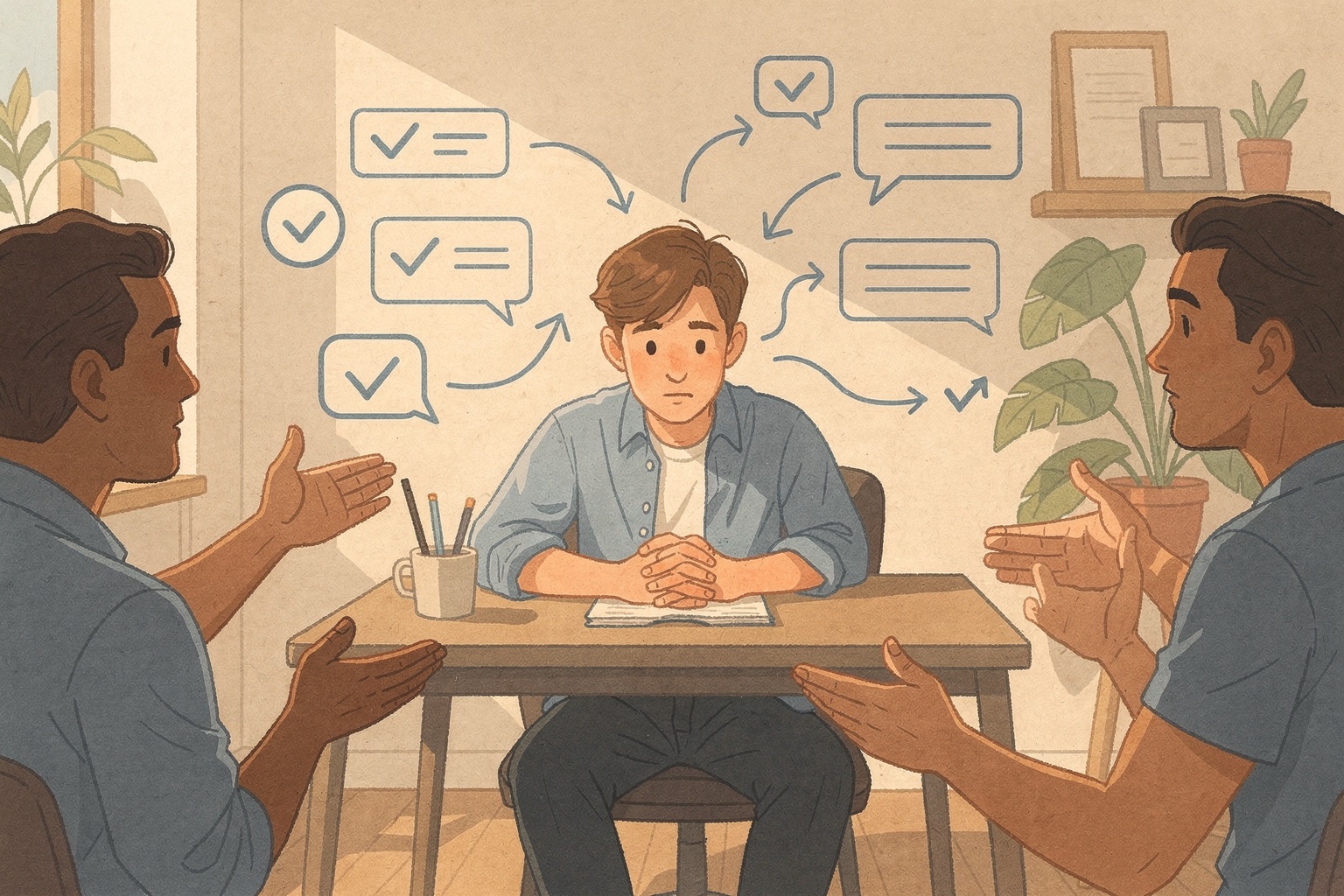
It looks like this. Every real decision waits for the founder. Every client question, past a certain size, gets routed to the founder. Every approval, every "is this okay to send," every "what should we do about this one" comes back to the same desk.
From the inside it can feel like being on top of things. In practice, it usually means the business cannot move faster than one person can answer.
When being the answer becomes the problem
Early on, everything going through the founder is normal and often correct. You know the most, you care the most, and there is not much to hand off yet.
The trouble starts when the business grows past that but the habit does not. The number of decisions goes up. The number of people who can make them does not. So a queue forms, quietly, at one desk. Work does not stop. It just waits.
And waiting has a cost that does not show up on any report. Clients wait a little longer. The team learns not to decide without checking. Momentum leaks out of every handoff that needs a yes before it can continue.
It is usually not a people problem
The easy read is that the team is not stepping up. Sometimes that is true. More often, the team is doing exactly what the business has trained them to do.
If decisions have always come back to the founder, people learn not to make them. Not because they cannot, but because it has never been clear which calls are theirs to make, or what the rule is when they are not sure. So they do the safe thing. They ask.
That is not a confidence problem. It is a clarity problem. The business has not made ownership obvious enough for anyone else to carry it.
The risk nobody likes to name
A business where everything routes through one person is fragile in a specific way. The day that person is out, or stretched thin, or simply wants a week off, the whole thing slows down.
It also caps growth. You cannot grow past the decisions one person can personally make in a day. At some point the founder becomes the ceiling, not by choice, but by default.
The goal is not for the founder to care less or step back from the work. It is to make clear which decisions belong to whom, and what to do when the answer is not obvious, so the business can keep moving when one person is not in the room.
A clear look this week
For one week, keep a simple list: every decision or approval that came back to you that did not truly need you.
At the end of the week, sort the list into two piles. The ones that genuinely needed you. And the ones that came to you only because it was never made clear that someone else could decide.
That second pile is the map. It shows you exactly where the business is leaning on you out of habit rather than necessity, and it points straight at what to make clear first. Each item is a missing rule, written in your calendar instead of in your business.
Working out which decisions should sit where, and writing down the rules so they can, is a core part of an Altvina Blueprint. The first pass, though, is just a list and an honest week of paying attention.
If you would rather not untangle it alone, a short fit call tells you whether that is the right next step: altvina.com/fit-call
More from this week
This piece stands on its own. This week's 5 pieces all look at The Workarounds Are the Warning Sign:
- Monday: When Workarounds Become the Way the Business Runs
- Tuesday: Why Good Employees Stop Bringing Up the Same Problem
- Wednesday: When Everything Has to Go Through the Founder (this post)
- Thursday: Clear Work Is Kinder Work
- Friday: What It Feels Like When the Business Runs Better
Keep reading
- The One Question to Ask Before Your Next AI Purchase · 5 min read
- The AI Waste Audit a Small Firm Can Run in an Afternoon · 6 min read
- The Job Nobody Wrote Down · 3 min read
Bring the work as it stands
If the priority is already clear, Altvina can help shape a scoped engagement around it. If the symptoms are clear but the right intervention is not, the Blueprint provides diagnosis, priorities, and a sequenced roadmap.
A 20-minute Fit Call is the simplest place to determine whether Altvina can help and which path makes sense.
Content and Accuracy Disclaimer
This article was drafted with AI assistance and reviewed by the Altvina team. We rigorously fact-check all content to ensure reliability.
Should you notice any inaccuracies or outdated information, please contact us so we can correct it. Your feedback helps us maintain high standards of accuracy and transparency.