Operational Efficiency Blueprint for founder-led service firms

Find the real operational bottleneck before you fund another fix.

The Blueprint is a fixed-fee diagnosis and sequenced operating plan. It shows what is slowing work, what to fix first, the tradeoffs in each path, and what outside help is actually needed.

Free call. No prep, no obligation, and no payment to talk.

Focused: $2,500 for one defined bottleneck. Expanded: from $3,500 for multiple connected issues.

If Altvina executes work that directly implements findings and recommendations documented in your Blueprint, 50% of its fee is credited toward that work. The credit does not expire and cannot be used for unrelated scopes.

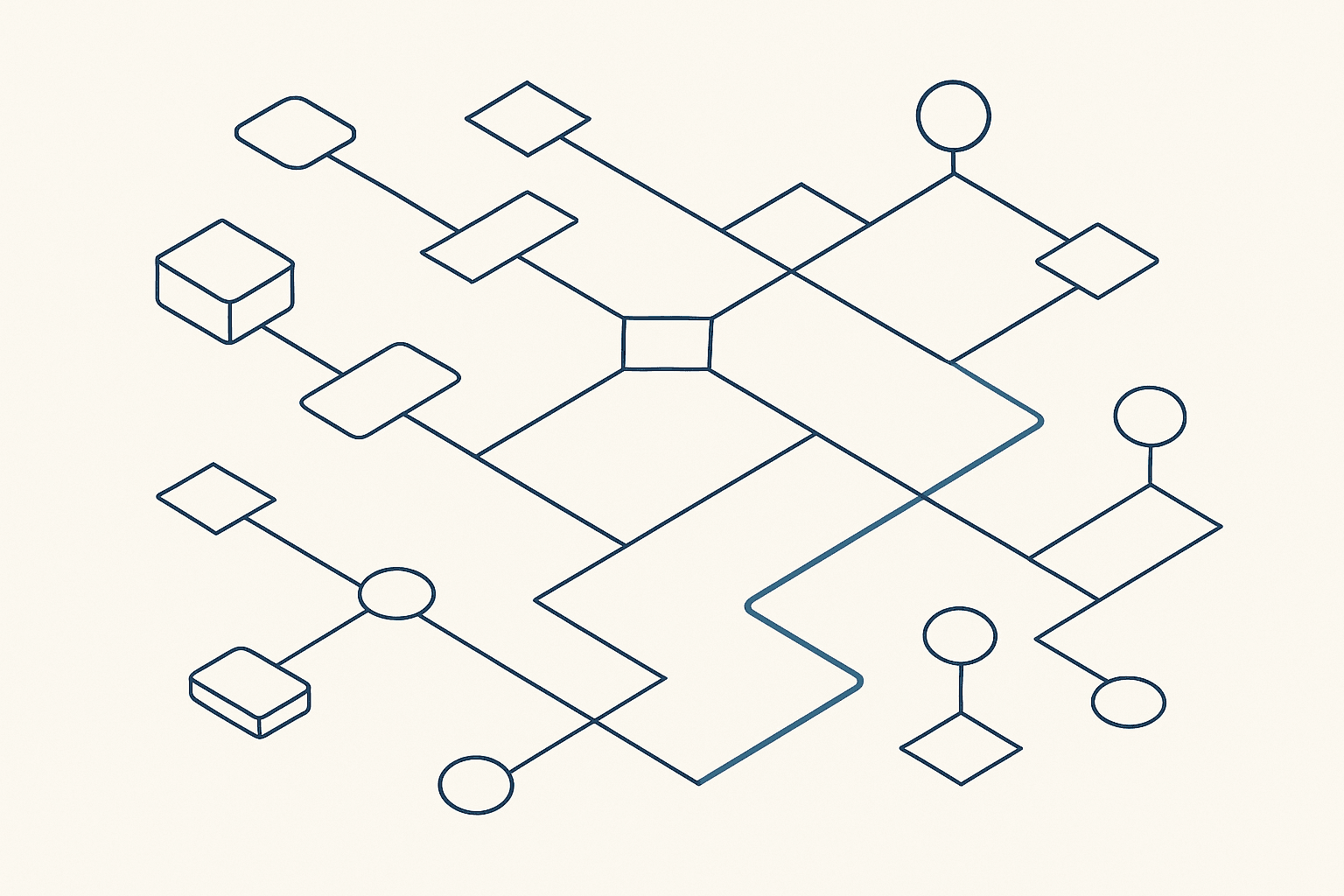
Operational efficiency map connecting workflows, decision points, and a sequenced improvement path

One decision-ready deliverable

  • Root-cause diagnosis, not a list of symptoms
  • Priorities and tradeoffs your team can act on
  • Owners, sequence, and a clear execution path

Start with fit

Is a Blueprint the right next step?

It is designed for a costly or recurring operating problem when the right fix is still unclear.

Strong fit when

  • Delivery keeps slipping while priorities look reasonable on paper
  • Ownership and handoffs are unclear across teams, tools, or recurring decisions
  • Reporting exists, but leaders debate what to trust or how to act on it
  • Senior people spend too much time coordinating instead of steering
  • You are weighing a hire, process change, automation, or outside help without a shared diagnosis

Probably not the right fit when

  • You need recruiting, staffing, or commodity task coverage
  • The problem and exact implementation are already defined
  • You want a software recommendation without examining the workflow around it
  • You want an open-ended retainer instead of a defined deliverable
  • Leadership is not willing to reconsider roles, meetings, or workflows if the evidence points there

The deliverable

What your Operational Efficiency Blueprint includes

A written artifact and walkthrough built for decisions and execution, not a deck of observations.

Root-cause diagnosis

An evidence-based read on what is constraining throughput, quality, or decisions, separated from the visible symptoms.

Prioritized opportunity map

The highest-value levers ranked by impact and feasibility, including where more spending would not solve the problem.

Decision paths and tradeoffs

Clear routes across hiring, redesign, automation, or targeted support, with the compromise each choice carries.

Owners and decision points

Who decides, who executes, and what must be true before the next step moves forward.

Sequenced operating roadmap

A practical order of operations aligned to your capacity, budget rhythm, dependencies, and risk tolerance.

Recommended execution path

A plain view of what your team can run, where outside expertise may help, and what support is unnecessary.

The Blueprint remains useful even if Altvina does nothing else.

You own the deliverable. Use it with your team, another provider, Altvina, or no one at all.

The method

Diagnose · Design · Deploy

Diagnose names the real constraint. Design turns it into a sequenced plan. Deploy adds execution support only if the plan reveals a capability or capacity gap.

Scope and pricing

Choose the footprint that matches the problem

The rigor stays the same. The scope changes with the number of connected issues.

One defined bottleneck

Focused Blueprint

$2,500 fixed fee

Best for a contained workflow, team, handoff, or recurring decision where the symptoms are visible but the correct next move is not.

  • One core workflow, team, or decision loop
  • A contained set of stakeholders and evidence
  • The complete Blueprint deliverable and walkthrough

Multiple connected issues

Expanded Blueprint

From $3,500 fixed fee

Best when the operational drag crosses workflows, functions, tools, or several recurring decision paths.

  • Several connected workflows or cross-functional decisions
  • A wider set of stakeholders, dependencies, or evidence
  • The complete Blueprint deliverable and walkthrough

How the 50% execution credit works

If Altvina is selected to execute work that directly implements the findings and recommendations documented in that specific Blueprint, 50% of the Blueprint fee is credited toward that work. The credit does not expire and cannot be used for unrelated scopes.

Book a 20-Minute Fit Call

We confirm the right scope and exact fee before you decide. Prefer writing? Tell us what's slowing you down.

Our promise

Low-risk by design. The price is the price.

A fixed fee, set before you pay

We agree the scope and the exact price together on the Fit Call. No hourly creep, no surprise invoice.

The plan is yours to keep

The Blueprint is a deliverable you own and can run with, on your own or with us. There is no obligation to buy anything else.

Half the fee can carry forward

If Altvina executes work that directly implements findings and recommendations documented in your specific Blueprint, 50% of the fee is credited to that work. It does not expire or apply to unrelated scopes.

We'll tell you if you don't need us

If we can't name a constraint worth more than the fee, we'll say so on the call. The Fit Call is free, and there's no payment to talk.

See the proof

Explore a full sample Blueprint

Choose the illustrative business closest to yours. Each sample follows the same five-part structure as a paid Blueprint, including account-level calculations, priorities, decision tradeoffs, and an honest view of where not to spend.

These are composite examples created to demonstrate the method, not client claims or promised results.

Pick the business closest to yours

Each is an illustrative composite, not a real client. Same rigor we bring to a real Blueprint.

Operational Efficiency Blueprint

Sample deliverable

Prepared for
Meridian Building Care (illustrative composite, not a real client)
Engagement
Focused Blueprint, $2,500
Scope
Profitability of the recurring contract book before a planned $150k sales and operations hire
Method
Diagnose, Design, Deploy
Prepared by
Altvina with a matched operator (multi-route janitorial operations and bidding)
Contents
Cover, executive summary, the brief, plus 5 sections

Illustrative sample. A composite grounded in patterns we see often, not a real client. Every figure is modeled from the composite's own records, not a measured result from any business.

Executive summary

Meridian came to us a week from signing two hires, a salesperson and an operations manager, about $150,000 a year, to win and run more big contracts. The owner was certain the problem was growth: the pipeline of large recurring accounts felt too thin to keep everyone busy. We asked to see the numbers behind the plan before anyone agreed it was a growth problem.

We rebuilt twelve months of finished work account by account, counting the hours that never make it onto an invoice: crew time, paid drive time between stops, the supervisor's windshield hours, and the after-hours callbacks nobody bills. The story inverted. The three largest, most-protected anchor accounts, the ones used as references and staffed around, run at a combined loss of about $60,500 a year once true hours are counted. The book of small one-off and post-construction jobs everyone treats as filler is what quietly funds them. This is not a thin-pipeline problem. It is a 'we cannot see which work makes money' problem, and Meridian was one signature from spending $150,000 to win more of the work that loses it.

Our recommendation: fix what the book earns before adding people. Re-price or renegotiate the three losing anchors, change how every new account is quoted so it can never silently go underwater again, fix the 58-day collection lag that is masking the bleed in the bank balance, then re-decide the hires from clean numbers. On these figures that recovers most of the leak inside a quarter and keeps the $150,000 in your pocket until the work actually earns it.

This Blueprint cost $2,500. The hire it asks you to pause is sixty times that, every year, pointed at the wrong problem.

What we cannot promise

We cannot promise your biggest anchor renews at a price that works, that conversation is yours and it may go badly; what we can hand you is the floor below which keeping each account costs you money, and the order to walk in.

The brief

A family-run commercial cleaning and building-maintenance company, about 30 people, roughly $4M a year, eight years in business. Revenue has climbed every year but the bank balance has not, and the owner was a week from hiring a salesperson and an operations manager, about $150,000 a year combined, to win and run more big recurring contracts. They came to Altvina to pressure-test that plan before signing the offer letters. We asked one thing first: show us, account by account, which work actually makes money. Nobody had ever counted it that way.

01

What we actually found

(Bottleneck Diagnosis)

How we looked

The owner was sure the problem was a thin pipeline of big accounts. Before agreeing, we did the one thing the business had never done: we pulled twelve months of completed work and rebuilt what each recurring account truly cost to serve, not what the proposal assumed. That means counting the hours that never reach an invoice, crew labor at the real loaded rate, paid drive time between stops, the supervisor's windshield and re-clean time, and the after-hours callbacks the dispatcher handles as a favor. Then we ranked every account by real profit, coldly, no matter how prized the logo is.

What we found (the part that flips the story)

The three largest, most-protected anchor accounts, the ones on the website, the ones crews were hired around, lose money once true hours are counted. It is not even across them: the medical office park is roughly break-even, but the regional bank branches and the distribution warehouse bleed about $33,900 and $29,700 a year. The small post-construction and one-off jobs everyone calls 'filler' carry a 24 percent margin and were quietly funding the anchors. Meridian does not have a growth problem. It has a 'we cannot see which work makes money' problem, and was about to spend $150,000 to win more anchors exactly like the ones losing it.

Recurring book, real profit by account (trailing 12 months)

Regional bank, 9 branches

Billed / yr
$214,800
Real cost / yr
$248,700
Real margin
-15.8%
What it hides
After-hours alarm callbacks, none billed

Distribution warehouse

Billed / yr
$181,200
Real cost / yr
$210,900
Real margin
-16.4%
What it hides
Two-man crew sent where the bid assumed one

Medical office park

Billed / yr
$163,500
Real cost / yr
$160,400
Real margin
+1.9%
What it hides
Roughly fine; scope crept but so did the rate

Mid-size recurring (11 accts)

Billed / yr
$2,140,000
Real cost / yr
$1,952,000
Real margin
+8.8%
What it hides
The quiet, healthy middle

One-off & post-construction

Billed / yr
$1,061,000
Real cost / yr
$806,000
Real margin
+24.0%
What it hides
The 'filler' funding the anchors

Reconstructed from Meridian's own job records and payroll, not industry averages. 'Real cost' includes unbilled drive, supervisor, and callback hours. Rounded to the nearest hundred.

Real margin by account type, trailing 12 months

Loss0Profit

The two losing anchors sit below the line. The work treated as least important is the most profitable.

Show our work: the worst account, line by line

Take the bank, 9 branches, billed at $17,900 a month. The bid assumed a 2.5-hour clean per branch, five nights. The crew clock and the route sheet say the real average is 3.1 hours once two older branches that always run long are counted. That gap is about 67 unbilled crew hours a month. Add the supervisor's 11 hours a month driving the route to re-check the two problem branches, and the after-hours alarm-reset callbacks, 4 to 6 a month at roughly an hour each, billed to no one. Loaded at Meridian's own labor rate, those unbilled hours run about $2,825 a month. That is why an account that 'looks like' $17,900 of revenue actually costs about $20,725 to serve. You are paying roughly $2,825 a month to keep this logo. We rebuilt every other account the same way, from your hours, not from estimates, which is why we believe the rest of the table.

The collection lag hiding it

58

days

Average time from work done to cash in the bank on the three anchors, against 30-day terms

28

days late

How far past terms the anchors run, so the bleed never shows up as a cash crunch on time

$94k

tied up

Roughly what is sitting in receivables past terms on the anchors at any given moment

Why it stayed hidden

These accounts were bid years ago from a rate sheet, won, and never re-costed, while the work quietly crept: a branch remodel that added square footage, a warehouse that started running a second shift, alarm callbacks that became routine. They are also the accounts the family defends hardest. The owner's brother runs the bank route and is proud of it; the warehouse was the win that 'put us on the map.' And the 58-day collection lag means the loss never arrives as a missed payroll, it arrives as a line of credit that keeps creeping up for reasons nobody can name. Nothing in the system showed the leak, and the people closest to it had reasons not to look.

Why an owner cannot catch this from the inside

This is a position problem, not a competence problem. Seeing it needs three things an owner running the day rarely has at once: the outside eye that knows exactly where margin hides in route-based cleaning work, the distance to call your proudest account unprofitable to your own brother's face, and the hours to rebuild a year of job costs and rank them without flinching. Altvina pairs a vetted operator who ran bidding and margin inside a multi-route janitorial firm with the systems and data lens needed to do the counting and say what it means. That judgment is what the diagnosis buys, not a spreadsheet you could have downloaded.

What we assumed (and would confirm)

We used Meridian's loaded labor rate as given. If the workers' comp class code or the real overtime load on the night crews is heavier than payroll showed, the anchor losses are larger, not smaller. We flag it because the re-pricing conversation should start from a number you have nailed down, and we would lock that down before the first call to the bank.
Section 1 of 5

How we worked

We rebuilt the composite’s real numbers from its own records, ranked the work by true profit, sequenced the fixes, and framed the decision. Diagnose, Design, Deploy. Every figure traces back to the business’s own records, no outside benchmarks or industry averages assumed.

What your Blueprint includes

  • Bottleneck Diagnosis
  • Operating Roadmap
  • Decision Framework
  • Expert Deployment Brief
  • Recommended Path Forward

This is one business’s blind spot. The method is the same. The answer is always different.

A Fit Call is 20 minutes, no payment, no slides: an honest read on where your margin is hiding and a straight recommendation, a Focused Blueprint, an Expanded one, or you do not need us yet. Sometimes that last one is the answer, and we will say so.

See what your numbers would say in 20 minutes.

No payment to talk. If we are not the right move, we will tell you.

Your Blueprint will use your operating evidence, constraints, and economics.

The purpose is not to manufacture a larger project. It is to give you a credible decision map, including when a hire, tool, vendor, or Altvina engagement is unnecessary.

Map my bottleneck

How Altvina delivers

Company accountability, matched discipline expertise

Altvina is accountable for the engagement. Vetted independent operators may diagnose, design, or execute where their discipline expertise fits the work. The company stays close to every project.

Altvina accountability

One accountable company owns the scope, quality bar, communication, and outcome of the engagement.

Discipline expertise

We match vetted operators to the work instead of forcing every problem through one generalist lens.

Intentional capacity

Altvina only accepts work it can support closely. Growth never takes priority over delivery quality.

Execution support is never required. If the Blueprint shows that your team can run the plan, that is a successful outcome. If a gap remains, support is scoped to a documented recommendation and a clear finish line.

Common questions

What buyers usually want to know

Do we have to hire Altvina to execute it?

No. You own the Blueprint and can execute it internally, use another provider, ask Altvina to help, or decide not to proceed.

What exactly can the 50% credit be used for?

Only work that directly implements findings and recommendations documented in that specific Blueprint. It never expires and cannot be moved to an unrelated scope.

Who performs the work?

Altvina remains accountable and may involve vetted independent operators with the discipline expertise the work requires. We only accept work we can support closely.

Which Blueprint scope should we choose?

Focused covers one defined bottleneck. Expanded covers multiple connected issues. We confirm scope and the exact fixed fee together on the Fit Call.

One clear next step

Know what to fix before you fund the fix

In 20 minutes, we can confirm whether the Blueprint fits your situation, choose the right footprint, and set the exact fee before you make a decision.

Book a 20-Minute Fit Call

No payment to talk. No prep, no obligation.

Prefer to start in writing? Tell us what's slowing you down.