Published August 28, 2026 · Altvina Insights · 4 min read
The Cash Timing Trap: Why Growth Can Look Good Until It Doesn't
Revenue growth and cash on hand are not the same thing. A firm can book strong numbers and still hit a wall months later, built by invoice timing, payment terms, and when new projects actually start.
Late August, three months of solid bookings ahead, pipeline full, revenue up. And somehow the operating account feels tighter than it did when revenue was lower.
This is not a math error. It is a timing problem, and it is genuinely common in founder-led services firms.
Two separate tracks
Revenue growth and cash flow are tracked as if they move together. In reality, they often move on completely different schedules.
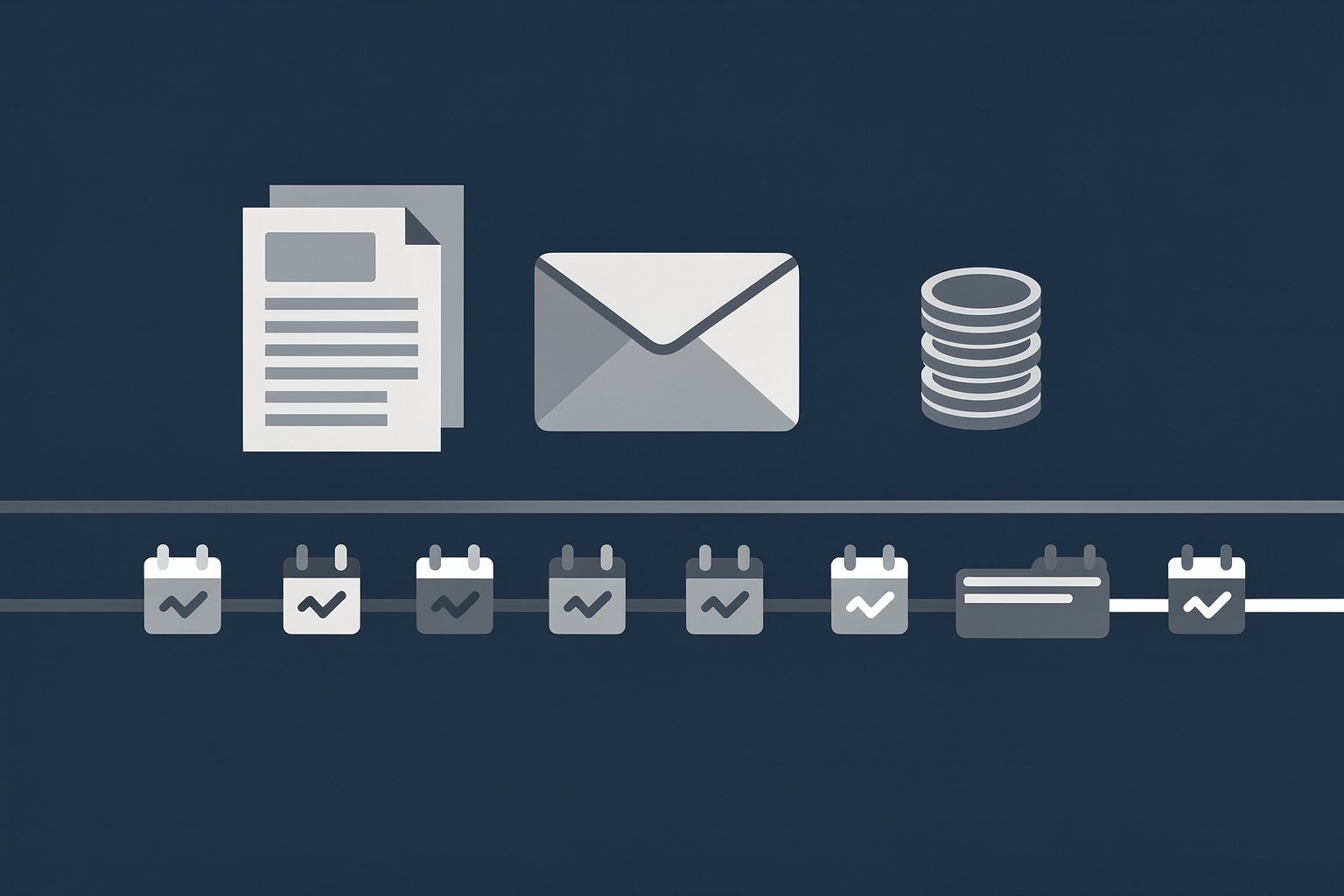
Take a firm that invoices at project end. A new client signs in June for a delivery that runs July and August. The invoice goes out September 1st. Payment terms are net 30. The cash arrives in early October.
The revenue count happened the moment the contract signed. The cash arrives two months later.
Over the same window, payroll runs every other week. Software subscriptions hit on the first. A supplier invoice from July is due net 15. Not one of them waits for the client's payment terms to finish.
Grow fast enough, and the gap between revenue recognition and cash arrival becomes the real constraint. A firm can look financially healthy on the P&L and run short on cash at the same time.
The two-step check
Start here: map your actual invoice cycle.
How many days pass from when a project ends to when an invoice goes out? Add the time the client typically takes to pay. This is your cash lag: the number of days between when you earned the money and when it hits the account.
Now look at your fixed costs. Payroll, rent, software, insurance, any recurring bill that does not move. Add up what leaves the account every month.
The gap between these two numbers is what you are funding from cash reserves or credit.
The second step: look at when new projects start.
Watch the clustering too: new project starts tend to land in the same weeks. September is heavy. January restarts. Or the back half of the quarter when budgets reset. When new projects start, you may bill upfront, or you may front costs before the client ever pays you.
If your project starts cluster, and your cash lag is long, you can be in a position where you are funding three to four simultaneous projects before any of them generate cash. Growth meets a real constraint there, and it shows up as a cash wall that was built in months earlier.
What usually needs to shift
The fix is rarely a line of credit. It is usually one of these:
Invoice faster. Some firms invoice at project end. Others invoice at milestones, or weekly. Shortening the lag by two or three weeks often solves most of the pressure.
Tighten payment terms with clients. Net 15 instead of net 30. Half upfront for longer projects. It is a direct conversation, and clients who value the work will usually take one of the options if you ask plainly.
Stagger new project starts. Not always possible, but if your starts cluster in September and January, spreading them across the quarter changes the funding requirement completely.
Front costs differently. If you are paying contractors or materials before the client pays you, shift to reimbursement or a deposit structure.
A firm that does all three, moving to weekly invoicing, asking for net 15 on new agreements and staggering onboarding, can change its funding requirement inside a quarter without changing a single thing about its revenue.
The check is not one-time
Run this math now, heading into your fall starts. Check it again in November when Q1 planning begins. A firm growing, hiring, or shifting project mix will move through different cash positions through the year. The constraint that is real in September might not be the constraint in March.
Cash matters and everybody knows it. What gets missed is that the constraint here is not profit. It is the timing of when money moves. A very profitable firm can run out of cash. And fixing it usually does not require new revenue.
Every lever in this piece is an operations decision. If you want a second set of eyes on which one to pull first, that is what a fit call is for.
More from this week
This piece stands on its own. Here are this week's 5 pieces:
- Monday: The Client You Cannot Afford to Lose
- Tuesday: You Found the Problem. Now What?
- Wednesday: The Hire You Might Not Need Yet
- Thursday: The Job Nobody Wrote Down
- Friday: The Cash Timing Trap: Why Growth Can Look Good Until It Doesn't (this post)
Content and Accuracy Disclaimer
This article was drafted with AI assistance and reviewed by the Altvina team. We rigorously fact-check all content to ensure reliability.
Should you notice any inaccuracies or outdated information, please contact us so we can correct it. Your feedback helps us maintain high standards of accuracy and transparency.