Published October 6, 2026 · Altvina Insights · 3 min read
Losing the Room in the First Minute, and How to Keep It
You can know your material cold and still lose a room before your first real point. Three habits in the opening minute decide it, and each one can be practiced.
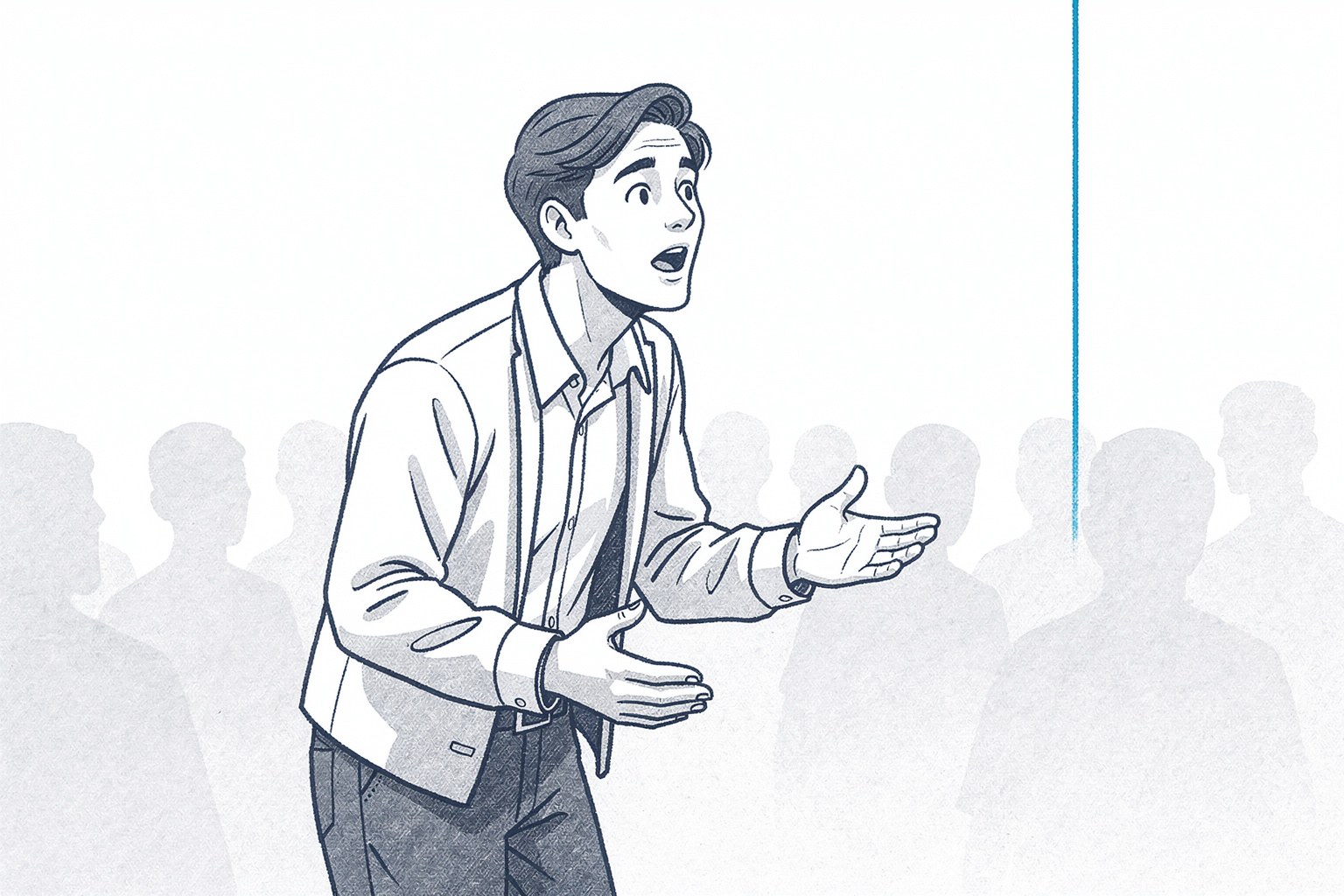
The next time you stand up to present, listen to what you say before your first real point. For a lot of capable people, that opening minute is where the room is won or quietly lost.
Losing the room rarely has much to do with knowledge. You can know the material better than anyone present and still watch attention drift before the second slide. The cause usually sits in the first sixty seconds, and it is usually one of three habits.
Habit one: the apology opener
"I will try to keep this quick." "Bear with me, I am not much of a presenter." "I know this is a bit dry." Each line is meant to be polite. Each one tells the room to expect less.
Open with the point instead. Say the one thing you most want the room to remember, in a single sentence, before you say anything about yourself or the slides.
Habit two: reading the slide aloud
When you read your own slide, the audience reads ahead of you, finishes first, and stops listening. They now know the slide and have no reason to hear you.
Put less on the slide and say more than it shows. A useful rule: if the slide could be emailed and understood without you, it is carrying too much.
Habit three: the hard question you hope nobody asks
Every room has one. The budget question, the why-now question, the one a senior person asks to test you. Waiting for it makes the whole talk feel defensive, because part of your attention is spent bracing.
Raise it yourself, early. "You may be wondering whether this is worth the cost. Here is how we thought about that." Answering a hard question before anyone asks it reads as confidence, because it is.
How to practice the first minute
Write out only your first minute, word for word. Record yourself saying it on your phone and play it back once. The apology or the slide-reading is usually obvious on playback, and much harder to hear while you are speaking.
Then cut your first sentence. In practice it is often throat-clearing, and the talk really starts at the second.
None of this requires becoming a natural performer. It requires a better opening minute, rehearsed until it no longer depends on nerves.
When it helps to work on it with someone
Some of this is hard to see from the inside. A seasoned operator can usually tell you which habit is yours in a single run-through, and help you rebuild the opening around the point you actually want to land.
Altvina's mentorship for professionals covers exactly this, with vetted, operator-led experts. It starts with a free 20-minute match call on our page for individuals.
More from this week
This piece stands on its own. Here are this week's 3 pieces:
- Monday: If You Stepped Away for a Year, What Would Be Left to Sell?
- Tuesday: Losing the Room in the First Minute, and How to Keep It (this post)
- Wednesday: Your Managers Are Passing Your Decisions Along Without the Reasons (coming Wednesday)
Content and Accuracy Disclaimer
This article was drafted with AI assistance and reviewed by the Altvina team. We rigorously fact-check all content to ensure reliability.
Should you notice any inaccuracies or outdated information, please contact us so we can correct it. Your feedback helps us maintain high standards of accuracy and transparency.