Published September 28, 2026 · Altvina Insights · 5 min read
The Numbers Arrive Late. Here Is What Should Have Arrived First.
Nike left the S&P 100 after eighteen years, and the warning signs ran well ahead of the numbers. For a founder-led services firm, revenue is the last place trouble shows up, and we name the three signals that move first.
Nike left the S&P 100 after eighteen years in the index. Inc's coverage made a point worth borrowing at any size: the warning signs preceded the numbers by a wide margin. The index membership was the confirmation, not the alarm.
A company that size has analysts, dashboards and a quarterly earnings cycle. It still found out in the order everyone finds out in. The pattern ran first. The number reported it afterward.
Our position: revenue is the least useful number for catching trouble early
We think revenue and margin are the last place a problem shows up in a founder-led services firm, and that an owner who mostly watches those two lines will always find out late.
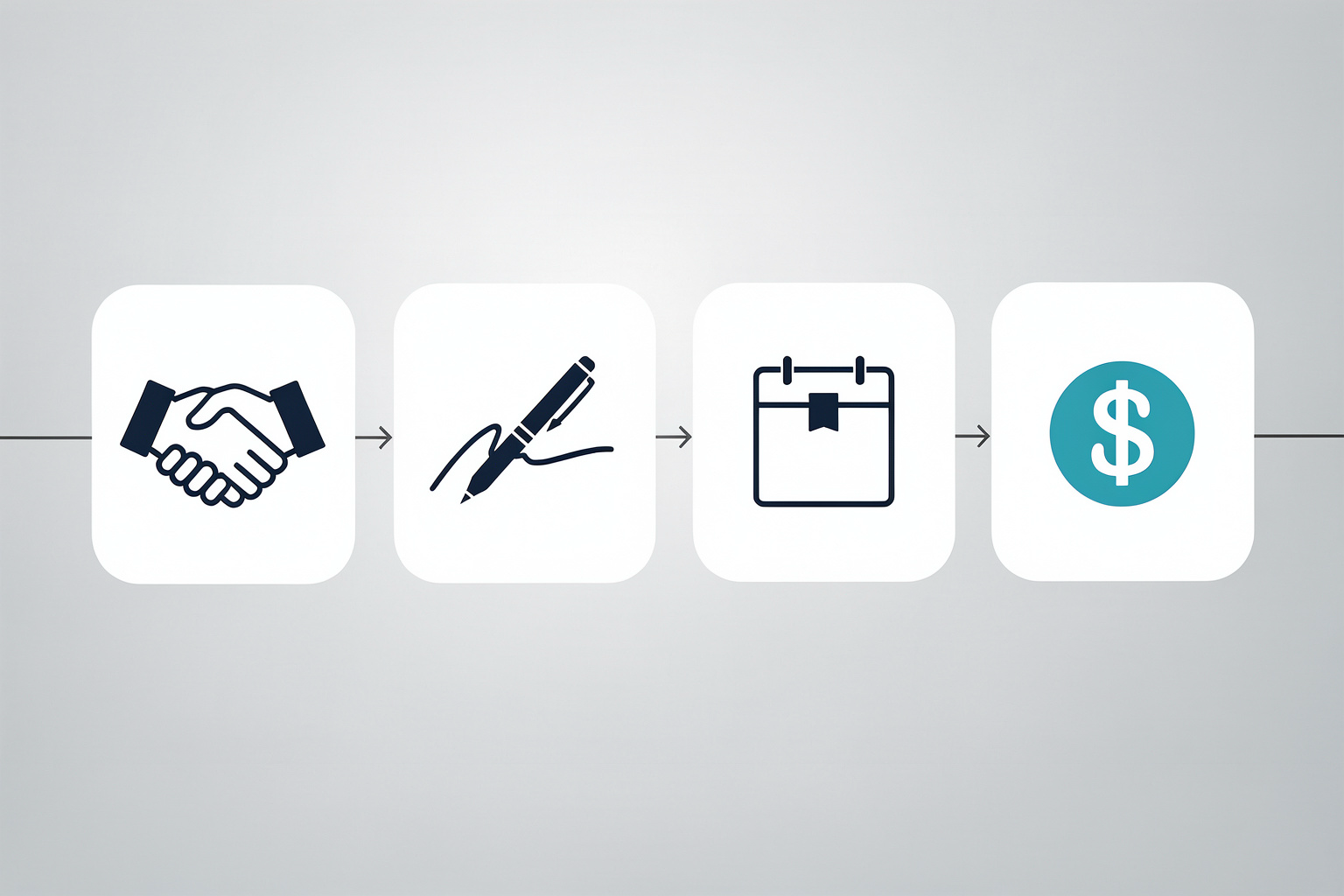
That is not because the numbers are wrong. The cause is how services revenue is made. Work gets scoped, then signed, then delivered, then invoiced, then paid. A retainer renews on a date somebody picked months ago. By the time a month looks soft, the decision that made it soft is old news, and often the person who made it has moved on to other things.
Revenue is also a summary. It adds up client mix, pricing, delivery speed, referral flow and who is available to do the work, then hands you one figure. A summary is useful for reporting. What it cannot tell you is which of those five things moved.
The inputs move much faster than your top line
You can watch this happen in the wider economy right now. According to SIEPR's brief on the US economy in 2026, the effective tariff rate implied from customs duties rose from 2.1% to an estimated 11.7% as of January 2026, and pass-through of tariffs to consumers now exceeds 50%. That is a sharp move in a cost input, and it lands on buyers directly.
Meanwhile the headline labor number drifted: unemployment rose from 4.1% to 4.4% in 2025, per the same SIEPR brief. Three tenths of a point over a year, while an input roughly five times its old level was working through the system.
Small firms sit in the same relationship to their own numbers. Your clients' budgets can tighten, your best two accounts can start scoping smaller, and your invoices can look fine for two quarters while all of it is true.
Three signals that arrive earlier
None of these need new software. All three can be read from work you already have on record.
1. Client concentration drift
Not concentration as a fixed number. The direction it is moving. Take the share of revenue from your top three clients this quarter and the same share a year ago. If that share is climbing while nobody decided it should climb, you are becoming more fragile at a speed that revenue growth will hide, because concentration and a good quarter often arrive together.
2. Repeat work versus new logos
Split the last twelve months of signed work into two piles: more work from clients you already had, and first projects from clients who are new. The ratio between those piles tells you which engine is actually running. A firm living almost entirely on repeat work has a delivery reputation and a quiet sales problem. A firm living almost entirely on new logos is re-earning its revenue from scratch every year, at full cost, and usually has a retention question it has not asked out loud.
3. How often a delivery decision comes back to you
This is the earliest of the three and the one nobody records. Count the decisions that reached you last week that would not have reached you a year ago. Pricing an exception. Approving a scope change. Choosing which client waits.
When that count rises, something upstream has gotten unclear: a role, a threshold, a rule that used to be written down and now lives in your head. Revenue will be the last thing to notice, because in the short run you absorbing those decisions is what keeps revenue looking normal. That part is common in service firms. The founder becomes the shock absorber, and the P&L reads it as stability.
What would change our mind
Two things, and we will say them plainly.
If your firm bills in near real time with no contracted backlog, high volume, short jobs, payment at completion, then revenue is a fast signal and our claim mostly does not apply to you. Watch it closely. The lag we are describing is a function of retainers, scoped projects and invoicing cycles, and if you do not have those, you do not have the lag.
And if these three signals turned out to be noise in practice, we would drop them. They are not benchmarks. There is no industry figure to compare against, and anyone selling you one is guessing. They only mean something read against your own last twelve months, which is also why they are cheap to check and easy to ignore.
Knowing which one is talking to you is the hard part
We are not going to pretend that watching three ratios fixes anything. Concentration drift can be a deliberate bet. A repeat-heavy book can be exactly right for a firm with two years of demand lined up. A rise in decisions routing back to you can be one bad month rather than a pattern.
The hard part is not collecting the signals. Working out which one is actually telling you something about your firm this quarter, and what it is pointing at underneath, is the hard part. That is a diagnosis, and it is the part most owners cannot do alone about their own business, because the pattern they are inside of looks like normal work.
If you have a number that looks fine and a nagging sense that something is off, the second read is worth having. Pick one of the three and look at it this week before you look at the P&L again.
More from this week
This piece stands on its own. Here are this week's 5 pieces:
- Monday: The Numbers Arrive Late. Here Is What Should Have Arrived First. (this post)
- Tuesday: The Meeting Where Nobody Agrees On Last Quarter (coming Tuesday)
- Wednesday: You Did Not Need It Faster. You Needed It Different. (coming Wednesday)
- Thursday: The Tool Is Not The Problem. It Is Covering For One. (coming Thursday)
- Friday: The Job Posting That Is Actually A Symptom (coming Friday)
Content and Accuracy Disclaimer
This article was drafted with AI assistance and reviewed by the Altvina team. We rigorously fact-check all content to ensure reliability.
Should you notice any inaccuracies or outdated information, please contact us so we can correct it. Your feedback helps us maintain high standards of accuracy and transparency.