Published November 3, 2026 · Altvina Insights · 3 min read
Ask Before You Name a Professional Reference
Choose someone who knows your work, confirm their permission and give them enough context to prepare for a real conversation.
You send an application with someone’s name attached. Have you asked whether they are willing to speak about your work?
A reference is a person agreeing to help, not a contact detail left over from your last job search. Their availability, role or preferred way to be contacted may have changed.
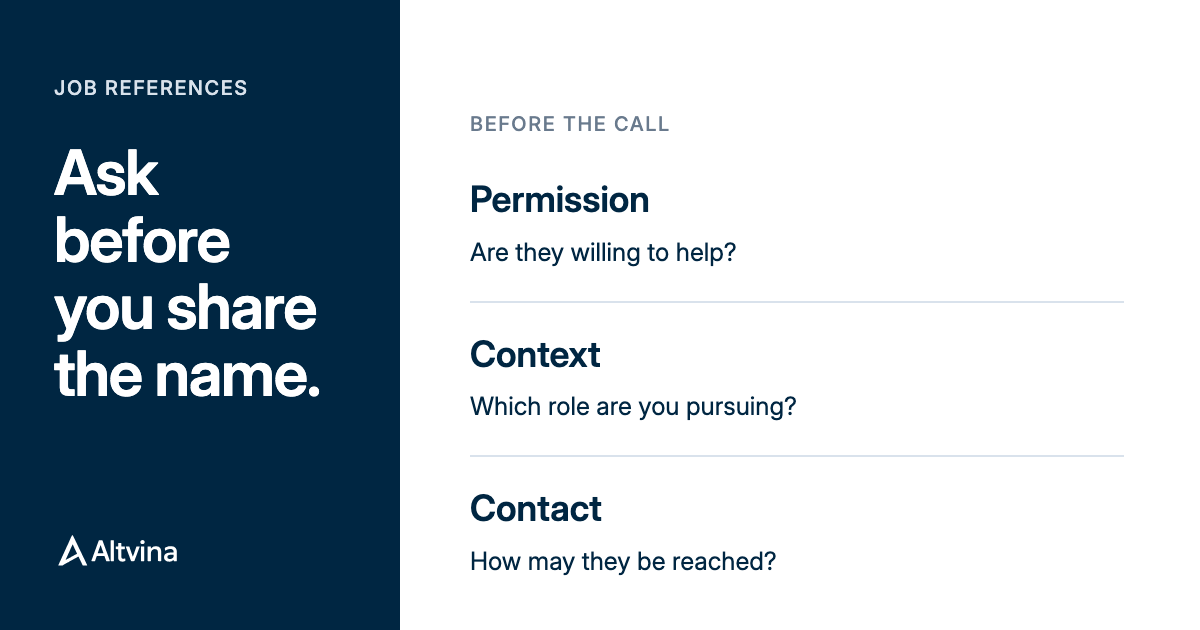
CareerOneStop’s reference guidance, sponsored by the U.S. Department of Labor, recommends asking before sharing a name. It also suggests discussing the role and confirming how the person wants to be reached.
Choose knowledge of your work over an impressive title
Think about who can describe something relevant that you actually did. A former colleague, supervisor or professional contact may be able to explain your contribution. A senior title is less useful when the person barely knows the work.
Follow the employer’s stated requirements. An employer may ask for a type of reference you cannot provide. Find out which alternatives they will consider. Keep the reporting relationship accurate, even when that makes the form harder to finish.
Make the request easy to answer honestly
Explain the kind of role you are pursuing and ask whether the person feels able to give a helpful, accurate reference. Leave room for them to decline.
After they agree, share the job description and your current résumé. Remind them of relevant work you did together. That is preparation, not a script for praise. They need to be able to give their own account.
Ask which contact details you may share and whether there are times they are unavailable. If your search is confidential, say so. Do not assume the person knows who may be told.
Keep the relationship larger than the request
Let them know when an employer may contact them. Thank them after they help, whether or not you receive the offer. Update them when the search changes direction instead of letting an old request sit indefinitely.
You do not need to maintain a large circle of impressive names. A small group of people who know your work and have agreed to help is a stronger starting point than an unconfirmed list.
Prepare before the form needs filling in: permission, context and a person who can speak from what they know.
More from this week
This piece stands on its own. Here are this week's 5 pieces:
- Monday: Know Which Client Loss Would Change Your Plans
- Tuesday: Ask Before You Name a Professional Reference (this post)
- Wednesday: A Client Complaint Needs a Way Back Into the Business (coming Wednesday)
- Thursday: A Career Break Does Not Need an Apology (coming Thursday)
- Friday: Agree How You Will Disagree With an Outside Partner (coming Friday)
Content and Accuracy Disclaimer
This article was drafted with AI assistance and reviewed by the Altvina team. We rigorously fact-check all content to ensure reliability.
Should you notice any inaccuracies or outdated information, please contact us so we can correct it. Your feedback helps us maintain high standards of accuracy and transparency.