Published November 19, 2026 · Altvina Insights · 3 min read
Ask What Your Listener Thinks You Promised
Under pressure, check what your listener thinks you promised. Confirm which action they would take and what still needs checking.
You rehearse an update and ask a colleague whether it was clear. They say yes. Before you finish, ask what they would now tell the client about the deadline.
Their answer may reveal a promise you did not mean to make. Checking the facts in your own answer matters. Checking what another person will do with that answer is a separate step.
Rehearse the decision your listener must make
Choose an upcoming update, recommendation or request. Use information you are allowed to share. Tell a willing colleague which decision the listener will need to make, then give the explanation in your own words.
Instead of asking only whether it was clear, ask:
- What would you tell the next person has been agreed?
- What would you start doing now?
- What would you still wait to have confirmed?
These questions test the explanation, not the colleague’s memory. Let them answer before supplying the interpretation you hoped they would give.
Find the assumption that changed the message
You might say, “We are aiming for Friday once the client approves the draft.” The listener might plan to announce a Friday launch. Ask which part of your explanation made that sound settled.
Perhaps you emphasized the date and rushed past the condition. Perhaps a slide made the date look final. Change the part that created the misunderstanding, then try the explanation again.
Be clear about who can make a commitment. An estimate you can explain is not necessarily a date you are authorized to promise.
Check the version that travels without you
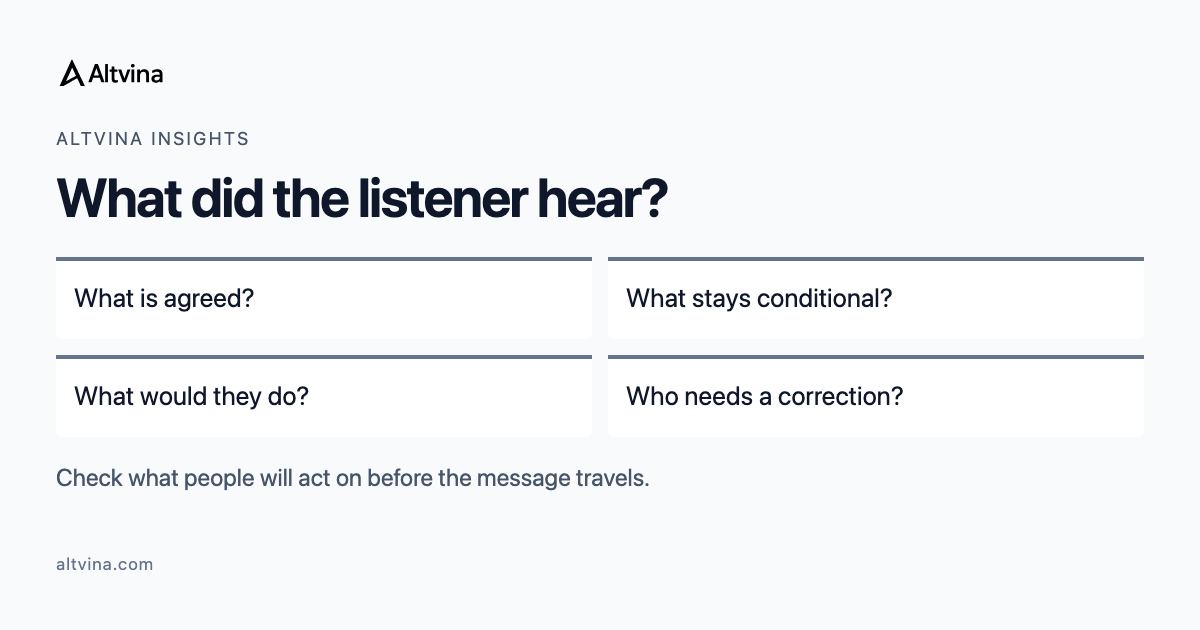
A useful conversation can still be followed by an ambiguous email. Read the short written update as though you had missed the meeting. Does it distinguish what is agreed, what remains conditional and when the next update will arrive?
If you know someone has taken away the wrong commitment, correct it before they plan around it. Send the correction to the people relying on the original message, not only to the colleague who spotted the problem.
Use the result to choose what to practice
If the listener cannot find your main point, work on the order of the explanation. If they understand the point but act on an unsupported deadline, work on how you state the condition. If you cannot answer their follow-up question, identify what you need to check.
Those are different practice needs. A trusted colleague may be able to help. If you would benefit from an outside perspective, individual mentorship with Altvina is another option to discuss.
The aim is a message the other person can use accurately. Ask what they believe they can now do with it.
More from this week
This piece stands on its own. Here are this week's 5 pieces:
- Monday: Did the Extra Work Reach the Invoice?
- Tuesday: Choose the Task You Want to Practice
- Wednesday: How Much Work Does Your Client Do?
- Thursday: Ask What Your Listener Thinks You Promised (this post)
- Friday: Agree When You Would Pause the Rollout (coming Friday)
Content and Accuracy Disclaimer
This article was drafted with AI assistance and reviewed by the Altvina team. We rigorously fact-check all content to ensure reliability.
Should you notice any inaccuracies or outdated information, please contact us so we can correct it. Your feedback helps us maintain high standards of accuracy and transparency.