Published July 21, 2026 · Altvina Insights · 6 min read
Where Work Stops at a Two-Person Firm
The plan for the posts you are reading this week was finalized on July 16, 2026. Publishing started July 20. Our rule at the time, written down on May 12, 2026, said content should be finished and approved four to six weeks before it went out. Four days is a long way short of four to six weeks. That gap was sitting in our own files, with dates on it.
Step one, run on ourselves, started with that gap. Last week's example firm had fifteen people. Ours has two founders, plus a vetted network of independent operators we match to client work. Nothing below is invented. Every observation of where our work stopped carries a date from our own records.
Step one: watch where the work stops
At fifteen people, work stops between people. A job sits and waits for someone else to pick it up, and you can see the pile.
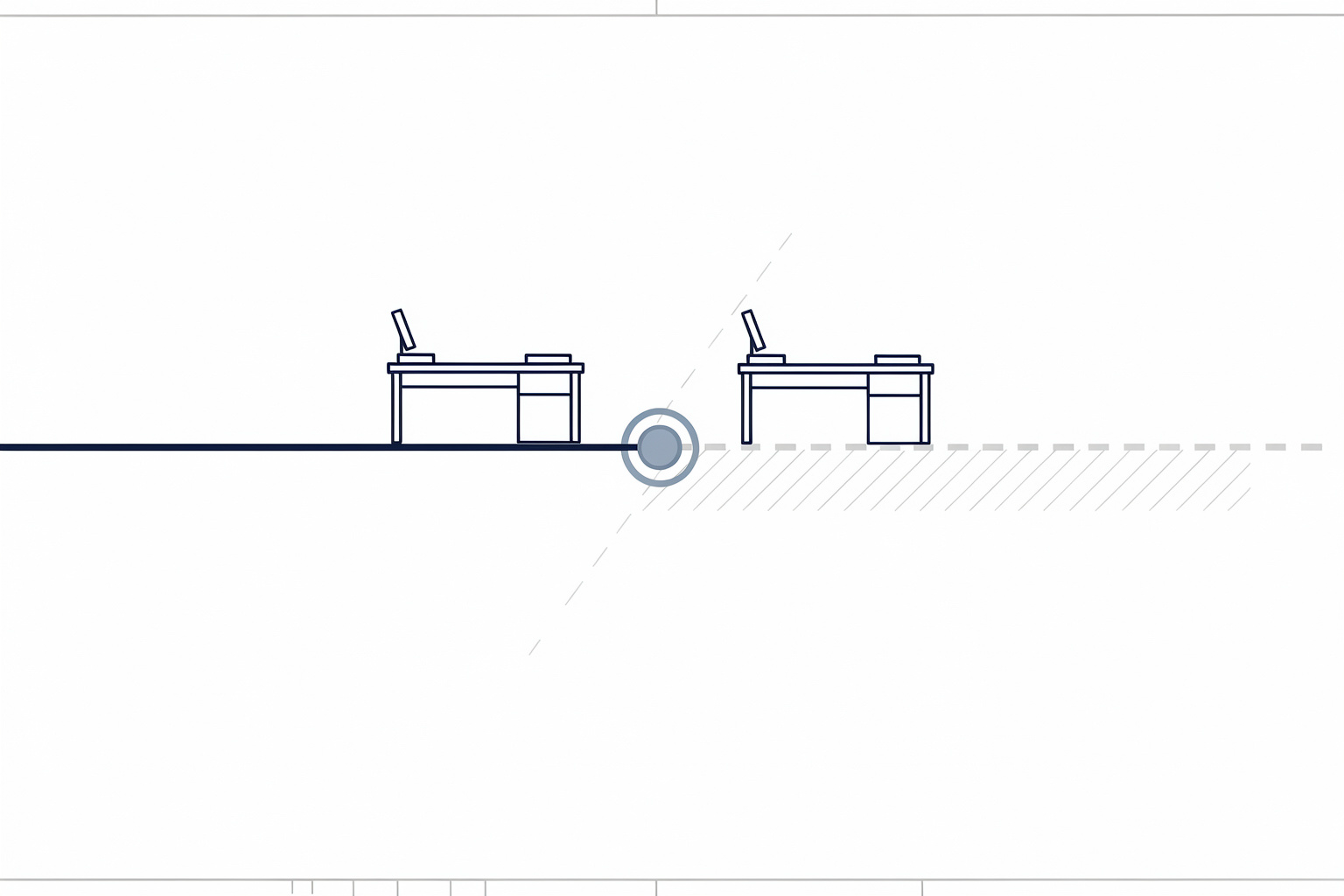
At two people, there is no pile on someone else's desk. There are only two desks. Work stops between the jobs the same two calendars are trying to hold at once, and you cannot stand anywhere and watch it happen. So you read your own records instead: the rules you wrote next to the dates you actually hit, the plans you approved next to what happened to them.
Ours showed three things.
The rule and the date. The rule in force during the period we diagnosed, written May 12, 2026: content should be finished and approved four to six weeks ahead. This week's plan was finalized on July 16, 2026, four days before its July 20 start. The four-day gap shows how far we had drifted from the rule we were using then.
For your firm: find a rule you wrote down, then find the date you last actually met it.
The push. On July 9, 2026, we started an end-of-month push: five separate efforts, all aimed at landing new clients before the end of July. A push like that only exists because the thing it chases was not showing up on its own.
For your firm: look at your last big push and ask what gap it was making up for.
Two decisions, three days apart. On July 6, 2026, we approved a plan. Its main goal: move routine work off the founders' hands. On July 9, 2026, we put most of that plan on hold and moved our time to finding clients. First we said the founders were the limit. Three days later we decided selling mattered more than building.
For your firm: put your last two dated decisions side by side and ask what changed between them.
Step two: the complaint we almost believed
Step two from last week is called the complaint is not the constraint. It means the problem everyone complains about is usually not the one keeping the others stuck.
Our complaint was easy to find. The founders are too busy, and there is too much to build. Both of us agree with it. At a firm of two, full agreement takes about a minute. Nobody pushed back, which should have worried us sooner than it did.
So we checked the complaint against the record. Client work is not what is running short: when delivery grows, our operator network carries it, because the firm was built that way on purpose. The diagnosis work, the part where we find a firm's real problem, has open room too. The real shortage sits earlier, in how few of the right potential clients reach a first conversation with us. The busy-ness is real, but it is not where the work stops.
We even have a date for the moment we stopped believing our own complaint: July 9, 2026. If too much to build were the real problem, the fix that day would have been more building time. We did the opposite: we parked the build and moved the hours to finding clients.
For your firm: write down the complaint everyone repeats, then check what your last big decision says you were really short of.
Step three: the cheapest question we asked ourselves
By now we had a guess: not enough of the right people are reaching us. Step three from last week is called the cheapest question that could prove you wrong. Before you act on a guess, try to break it cheaply.
The cheapest question that could break ours: what if the shortage is our own fault, because of how we pick who to write to?
We already have a way to check that. When we run outreach experiments, we grade the message and the list we chose, never the person who did not reply. We do not trust any single reply, good or bad. We read the whole pattern, compare it with outside best practice, and check it against what we know about our buyers before drawing a conclusion. If our list-picking were the problem, that grading would catch it. What survived this question gets written up tomorrow.
For your firm: before you blame the market, ask which of your own choices could create the same picture.
A cheap question also has to be allowed to answer: leave it alone. Some rough edges are not worth fixing right now, and a check you run on yourself only counts if that answer is allowed to win.
For your firm: check whether "leave it alone" is an answer your questions are allowed to give.
What we found so far
Three steps, run on a firm of two. None of it happened in a hallway. We do not have one. Every stop showed up as dates in our own files: a rule from May 12 next to a plan finalized July 16. A push started July 9. A plan approved July 6 and parked three days later.
If your whole firm fits in one room, this is what watching where the work stops looks like. And if you have a team, the same check still runs on the one desk everything ends up on: yours. Your calendar and your last three dated decisions are records too. Instead of watching people, you read your own records and hold what they say next to the story you tell yourself. Records do not argue. They just have dates.
Tomorrow we name the result: our constraint, the one problem that keeps the others stuck, in one plain sentence, in a short filed memo.
This week, the five steps run on us, one day at a time: the rules we set before diagnosing our own firm · where work stops at a two-person firm · our constraint, in one plain sentence · the sentences we threw away · the decision, priced.
More from this week
This piece stands on its own. This week's 5 pieces all look at Diagnosing Our Own Firm:
- Monday: The Rules We Set Before Diagnosing Our Own Firm
- Tuesday: Where Work Stops at a Two-Person Firm (this post)
- Wednesday: Our Constraint, in One Plain Sentence
- Thursday: The Sentences We Threw Away
- Friday: The Fix We Chose, Priced
Content and Accuracy Disclaimer
This article was drafted with AI assistance and reviewed by the Altvina team. We rigorously fact-check all content to ensure reliability.
Should you notice any inaccuracies or outdated information, please contact us so we can correct it. Your feedback helps us maintain high standards of accuracy and transparency.